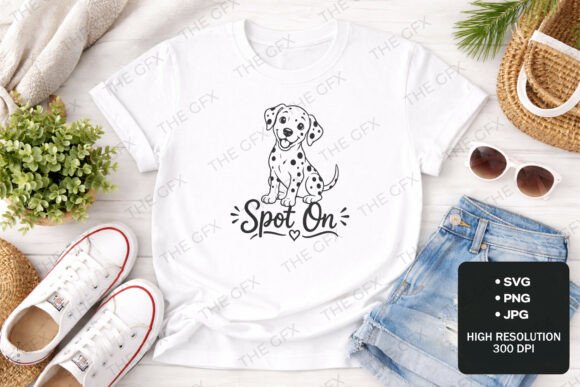
Spot on Dalmatian T-Shirt Design Review
As a professional embroidery digitizer and product reviewer, I approach every new graphic with a specific question: will this actually stitch out cleanly on fabric? When evaluating the Spot on Dalmatian T-Shirt Design, my immediate focus is on how minimalistic line art translates from a digital screen to a tangible, textured surface. This design captures the playful and spotted charm of the Dalmatian breed with an energetic yet clean aesthetic. For fellow designers, Etsy sellers, and apparel decorators, understanding the practical application of this machine embroidery design is crucial before committing it to a commercial product or personalized gift.
First Impressions and Visual Personality
The initial appeal of this Spot on Dalmatian T-Shirt Design lies in its restraint. In an industry often saturated with overly dense fill stitch patterns that can distort lightweight fabrics, this minimalistic approach is refreshing. The line art style suggests a modern, boutique feel rather than a traditional, heavy-handed craft look. As a graphics asset, it possesses a distinct visual personality that feels current and versatile. For a handmade product creator, this means the design has high adaptability. It does not scream "embroidery" in a dated way; instead, it looks like intentional fashion illustration.
However, minimalism in embroidery is deceptive. While it uses fewer stitches, it demands higher precision. A running stitch outline leaves no room for error. If the registration is off by even a fraction of a millimeter, the dog’s distinctive spots might misalign with the body contour. My first impression is positive, but cautious. This design belongs on projects where negative space is celebrated, such as organic cotton tees, linen tote bags, or minimalist nursery decor. It is not designed to cover flaws in fabric; it is designed to highlight quality materials.
Real-World Application: Stitching a Custom Sweatshirt
To truly evaluate this embroidery file, I mentally simulated a recent client request: a custom embroidered sweatshirt for a pet boutique owner wanting branded merchandise. Sweatshirts are notoriously tricky due to their stretchy knit structure and fleece backing. Using the Spot on Dalmatian T-Shirt Design in this scenario requires strategic planning.
Because the design relies on line art, I would avoid using a heavy cutaway stabilizer that creates a stiff "bulletproof vest" effect inside the garment. Instead, a medium-weight fusible mesh stabilizer would be ideal to maintain the drape of the sweatshirt while preventing puckering during the stitching process. The open nature of the design allows the fabric texture to breathe through the embroidery, which is essential for high-end custom apparel. Customers buying from small shop products expect comfort alongside aesthetics. If the chest placement feels rigid or scratchy because of excessive stitch density, the perceived value drops immediately.
In this real-life case, the design serves as a perfect left-chest logo or a centered yoke detail. Its energetic lines complement the casual nature of a sweatshirt without overwhelming the wearer. For an Etsy seller listing this finished product, photographing the texture contrast between the smooth thread and the fuzzy fleece becomes a major selling point. The design’s simplicity ensures it remains legible even in smaller thumbnail images used for digital product previews.
Navigating Fabric Limitations and Hoop Sizes
While versatile, this Spot on Dalmatian T-Shirt Design requires careful consideration regarding substrate selection. Line art behaves differently across various fabric textures. On smooth, tightly woven cotton like quilting fabric or poplin, the satin stitch or running stitch elements will appear crisp and defined. However, on highly textured surfaces like terry cloth towels or chunky knits, the fine details risk getting lost.
If you intend to use this for kitchen towels or baby embroidery items, you must verify the stitch width. Thin lines may sink into the pile of a towel. In such cases, adding a light topping stabilizer is non-negotiable to keep the stitches sitting on top of the fabric loops. Conversely, on thin, sheer fabrics like voile or lightweight rayon, the design’s low stitch count is actually an advantage. Heavy applique designs often drag down delicate materials, but this minimalistic graphic sits lightly, making it suitable for summer baby clothes or sheer curtain accents.
Hoop size is another critical factor. Before purchasing or downloading this digital embroidery file, confirm the dimensions against your available hoops. Minimalistic designs often suffer when resized drastically. Scaling down too much can cause jump stitches to become visible gaps or cause tiny details to merge. Scaling up too much can make single lines look sparse and unfinished. Always check the original digitizing parameters. If the design was created for a 4x4 hoop, forcing it into a 6x10 area without re-digitizing may compromise the visual balance.
Commercial Viability and Brand Consistency
For creative entrepreneurs and craft business owners, consistency builds trust. This Spot on Dalmatian T-Shirt Design offers excellent potential for brand cohesion. Because it is essentially line art, it pairs exceptionally well with simple, sans-serif typography. If you are creating a collection of pet-themed goods, this design can anchor the series without competing with other elements.
When creating printable mockups for your online store, test the design against both light and dark backgrounds. Line art typically requires high contrast to be effective. White thread on a navy sweatshirt reads beautifully, but white thread on a pale heather gray might vanish in photos. Consider how thread colors interact with your brand palette. Unlike complex multicolor designs that lock you into specific shades, this minimalistic style allows for easy color swapping to match seasonal trends or specific client requests.
Furthermore, consider the licensing and usage rights. Before selling finished products or offering this as part of a digital bundle, ensure you have the appropriate commercial license. Professionalism involves respecting intellectual property. Clear licensing terms protect your business and reassure customers that your handmade products are ethically sourced. This transparency enhances buyer engagement and establishes your reputation as a serious maker rather than a hobbyist cutting corners.
Essential Designer Notes for Success
Based on my evaluation, here are practical steps to ensure success with this Spot on Dalmatian T-Shirt Design:
- Test Stitch First: Never run this design directly on a final product without a test. Use scrap fabric that matches the weight and stretch of your intended project. Inspect the registration of the spots against the outline.
- Evaluate Stabilizer Pairings: Match your stabilizer to the fabric, not just the design. Knits need fusible mesh; wovens might only need tear-away; towels require water-soluble topping.
- Check Thread Contrast: Minimalistic art fails without contrast. If stitching on dark fabric, ensure your thread has enough sheen or brightness to stand out. Matte threads on dark matte fabric can look muddy.
- Verify Small Details: Zoom in on the embroidery file in your software. Ensure there are no stray nodes or overlapping stitches that could cause needle breaks or thread bunches in such a clean design.
- Mockup Realistically: Do not rely solely on flat digital renders. Create physical samples or use high-quality 3D mockups that show fabric grain. Customers need to visualize the scale relative to the garment.
- Confirm Licensing: Double-check if the license covers physical product sales, digital file resale, or print-on-demand use. Document this for your business records.
- Assess Washability: Line art generally washes well because it lacks dense fill areas that trap detergent. However, ensure proper anchoring stitches are present so the design doesn't unravel after repeated laundering, especially for baby embroidery or tea towels.
Ultimately, the Spot on Dalmatian T-Shirt Design is a strong contender for modern embroidery projects. Its strength lies in its elegance and adaptability, provided the maker respects the technical requirements of stitching line art. By approaching this design with a professional mindset—testing, stabilizing correctly, and considering the end-user experience—you can transform a simple digital graphic into a high-value, cherished finished product that celebrates the timeless charm of the Dalmatian breed.