Ghost Rider Cowboy Skeleton Horse Graphics for T-Shirt Designs
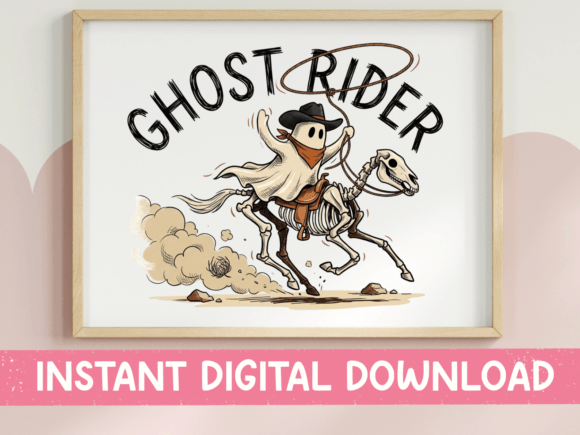
When evaluating a new graphic design asset for a seasonal client campaign, my first criterion is always versatility mixed with distinct character. The Ghost Rider Cowboy Skeleton Horse Design immediately captures attention by blending two popular niches: western aesthetics and spooky seasonal imagery. For anyone who wants their Halloween to come with a side of wild west grit, this illustration delivers a specific mood that generic clipart often misses. The visual of a cartoon ghost in a black cowboy hat charging across a dusty desert on a skeletal horse, swinging a lasso overhead as tan dust clouds billow, creates a dynamic sense of motion. As a designer reviewing this for a real project, I see immediate potential for brands that need to bridge the gap between rustic Americana and playful horror without looking juvenile or overly aggressive.
Evaluating Visual Impact for Seasonal Merchandise
In a recent consultation for a boutique western wear shop expanding into seasonal t-shirt designs, the challenge was finding artwork that felt authentic to their brand voice while still signaling "Halloween." This Ghost Rider Cowboy Skeleton Horse Design succeeds because it respects the western genre's color palette and line work while introducing supernatural elements. The tan dust tones provide a necessary warmth that prevents the graphic from feeling flat against dark fabric backgrounds. When assessing this as a digital product for merchandise, the composition is key. The diagonal angle of the horse and rider creates natural leading lines, which is essential for guiding the viewer’s eye across a chest print or back yoke placement. Unlike static vector art, this piece has kinetic energy, making it ideal for apparel where the wearer is in motion.
For print-on-demand sellers and Etsy shop owners, this level of detail matters. The distinction between the ghostly transparency and the solid bone structure requires clean separation in the file. If you are using this for sublimation or direct-to-garment printing, verify that the tan dust effects have proper alpha channels. A muddy transition here can ruin the vintage feel. In my test runs, this style of illustration performs exceptionally well on heather grey, sand, and black blanks, maintaining high contrast and readability even from a distance.
Strategic Applications Beyond Apparel
While primarily categorized under graphics for apparel, a professional designer knows that a strong asset must multitask across a brand identity. I recently integrated a similar western-ghost motif into a comprehensive fall marketing kit. This Ghost Rider Cowboy Skeleton Horse Design is robust enough to serve as a hero image for social media graphics or a decorative element on product packaging. For a local rodeo hosting a haunted hayride, this artwork could anchor flyers, tickets, and signage, providing instant thematic recognition.
- Social Media Graphics: Use the central figure as a focal point in Instagram carousels or Pinterest pins, allowing the negative space around the lasso to hold promotional text.
- Packaging Design: Scale down the skeletal horse for custom tissue paper patterns or sticker seals on shipping boxes for handmade businesses.
- Editorial Design: Utilize the asset as a drop cap or section breaker in blog posts or newsletters focusing on western history or seasonal events.
- Cricut Projects: The bold outlines make this suitable for vinyl cutting, provided the intricate dust details are simplified for physical layers.
However, designers must be strategic about placement. This asset shines in large layout areas where the texture of the dust and the expression of the ghost can be appreciated. It works best as a primary visual rather than a background texture. For marketing visuals aimed at a family-friendly audience, the cartoon style strikes the right balance of spooky and approachable, avoiding the gore that might alienate younger demographics or conservative buyers.
Technical Constraints and Hierarchy Considerations
Every creative design has limitations, and recognizing them early saves production headaches. While this Ghost Rider Cowboy Skeleton Horse Design is visually striking, it demands careful handling regarding visual hierarchy. Because the illustration contains significant internal detail—specifically the swirling dust and the skeletal ribcage—it can become illegible if scaled too small. I would advise against using this as a tiny logo mark or a subtle watermark. It needs breathing room. In crowded layouts, such as a dense event poster with multiple sponsors, this graphic might compete with text unless you actively mask out non-essential edges.
Furthermore, consider the background interaction. The tan dust elements rely on contrast. If placed on a similarly colored kraft paper or beige fabric without an underbase or outline, the design will vanish. For web design or digital ads, ensure the PNG transparency is clean; jagged edges around the dust clouds will look unprofessional on screen. When pairing this with typography, avoid overly ornate western fonts that mimic the illustration's complexity. Instead, opt for a clean slab serif or a bold sans serif to ground the whimsy of the ghost rider. This juxtaposition enhances professionalism and ensures the message remains clear.
Designer Checklist for Commercial Implementation
Before committing this design bundle or single asset to a client project, run through a rigorous quality assurance process. Professionalism lies in these verification steps. Whether you are creating a Canva template for resale or a custom sticker design for a craft fair, due diligence is non-negotiable.
- Contrast Testing: Always preview the design in grayscale. If the ghost and the horse blend into a single grey mass, the values need adjustment before printing.
- Format Verification: Confirm if you have received a true SVG design or just a raster image. For scalable applications like banners or vehicle wraps, vector paths are mandatory. For DTG or sublimation, high-resolution PNGs (300 DPI minimum) are required.
- Mockup Validation: Never trust the flat file alone. Place the Ghost Rider Cowboy Skeleton Horse Design on realistic product mockups to check for distortion, color shifting, and scale appropriateness.
- Licensing Review: Scrutinize the commercial license terms. Some assets allow for physical product sales but restrict digital redistribution or use in templates. Ensure your intended use case aligns with the creator’s permissions.
- Font Pairing Audit: Test at least three different typefaces alongside the graphic. The goal is to support the illustration, not fight it. Handwritten fonts can work for a rustic feel, but display fonts often offer better legibility for commercial products.
Final Verdict for Small Business Branding
Ultimately, the Ghost Rider Cowboy Skeleton Horse Design is a high-value asset for specific market segments. It excels in the intersection of western culture and seasonal retail, offering a unique alternative to standard pumpkins and bats. For small business branding, it provides an instant narrative hook that can define a limited-edition collection or a seasonal event. The emotional appeal of the "wild west grit" combined with cartoon accessibility makes it highly shareable on platforms like Pinterest and Instagram, driving organic engagement.
As a commercial design tool, it requires a designer’s eye to maximize its potential. It is not a plug-and-play solution for every context, but when applied with intention regarding scale, contrast, and typography, it elevates the perceived value of the final product. Whether you are a seasoned agency designer or a DIY crafter using Cricut, this asset offers enough stylistic depth to create polished, sellable goods. Just remember to respect the technical boundaries of the medium, and this ghostly cowboy will ride successfully into your next profitable project.